How Long Should a Website Last... Before It Needs a Redesign?

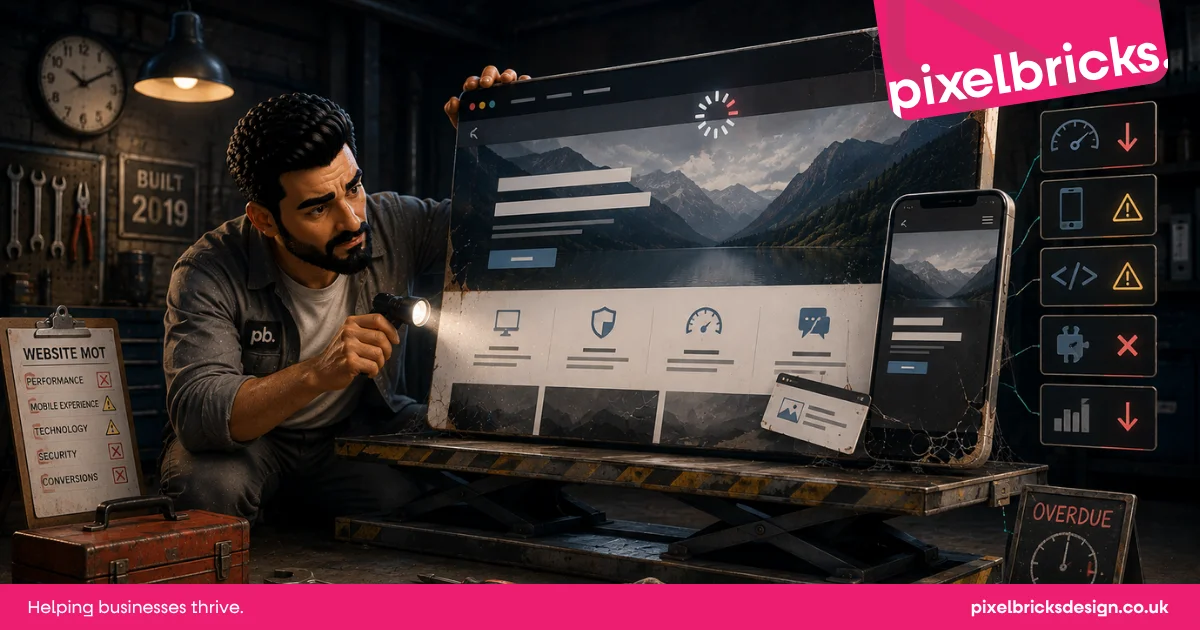
Here is a number that will make you feel either relaxed or panicked depending on how old your website is: two years and seven months.
That is the average lifespan of a website, according to research. Some sources say three years. Some say five for well-maintained sites. The reality, as usual, is somewhere in the middle and entirely dependent on whether you built the thing properly in the first place.
But the question is not really about time. It is about whether your website is still doing its job! And most business owners answer that question based on how the site looks rather than how it performs, which is exactly backwards.
Why Websites Age (And Not Always Gracefully)
Websites do not age like fine wine. They age like milk. Slowly at first, then all at once.
The technology moves. Design trends shift. User expectations climb. What looked sharp in 2023 looks tired in 2026. Not because the design is objectively bad, but because the world around it has moved on and your visitors can feel it even if they cannot articulate why.
Then there is the stuff that actually matters. Your CMS stops getting updates. Your plugins start conflicting. Your page speed creeps up because nobody has optimised the images since launch. Your mobile experience that was "fine" three years ago is now being compared to apps that have had three more years of polish.
As I have said before, a slow website is quietly costing you money. The problem is that most owners do not check until someone tells them.
The Five Signs It Is Time
Forget the "every three years" rule for a moment. Here are the actual signs your website needs a redesign!
1. It Has Stopped Producing Enquiries
This is the most obvious one and somehow the most ignored. If your website used to generate enquiries and has slowly (or suddenly) stopped, the website is telling you something. It might be design, it might be speed, it might be that your competitors have all upgraded and you now look like the budget option by comparison.
A website that stops converting is not a website that needs a tweak. It needs a proper look at what has changed.
2. You Apologise When You Share the Link
You know the feeling. Someone asks for your website address and you say "yeah, it's a bit out of date" or "we're actually getting it redone soon." If you are embarrassed to share your link, your customers are embarrassed to spend time on it.
This is not vanity. Trust is visual. If your site looks dated, people assume your business is dated. Unfair? Absolutely. But looking fine is not the same as being fine, and visitors can tell the difference faster than you think.
3. It Does Not Work Properly on Mobile
Over 60% of web traffic is mobile. If your website was built when "mobile friendly" meant "it loads on a phone," you have a problem. Modern mobile design is not about shrinking a desktop site. It is about building a completely different experience for someone on a smaller screen, often with one hand, usually in a hurry.
If you have to pinch and zoom to read your own website on your phone, imagine how a potential customer feels.
4. You Cannot Update It Without Fear
A website should let you add a blog post, update a service page, or swap a photo without needing to phone a developer. If every content change feels like defusing a bomb, your CMS is either outdated, poorly configured, or both.
The whole point of a CMS is that you can manage your own content. If you cannot, you are paying for a system that is actively working against you.
5. Your Competitors Have All Upgraded
This one stings. Open three competitor websites right now. If all three look more modern, load faster, and answer questions more clearly than yours, you are not behind. You are invisible by comparison.
You do not need to be the best website in your industry. But you cannot afford to be the worst.
When You Should NOT Redesign
Not every problem needs a full rebuild. Some websites just need better content, faster hosting, or a few pages restructured. If the bones are good (clean code, decent CMS, responsive framework), you might just need a refresh rather than a replacement.
Also, do not redesign because you are bored. A website that looks fine and converts well does not need a redesign just because you have seen it every day for two years. That is your fatigue, not a design problem. If you want to know why a new website does not automatically rank on Google, it is because Google does not care that you got bored. It cares about content, structure, and performance.
So How Long Should It Actually Last?
Two to three years for a small business website. Four to five if it was well built and well maintained. Past five years and you are living on borrowed time, regardless of how good it looked on day one.
But the real answer is this: your website should last exactly as long as it keeps doing its job. The moment it stops generating enquiries, starts looking dated next to competitors, or becomes painful to update, the clock has run out. The date on the calendar is less important than the data on your dashboard.
And if you are reading this thinking "ours is probably fine," go and check it on your phone right now. I will wait.
FAQs About Website Lifespan and Redesigns
How often should you redesign a small business website?
Every two to three years on average. Well-built and well-maintained sites can last four to five. But the real indicator is performance, not the calendar. If enquiries have dropped or it looks dated next to competitors, it is time.
What are the signs a website needs a redesign?
Declining enquiries, embarrassment when sharing the link, poor mobile experience, difficulty updating content, and competitors with better websites. If two or more of these apply, you are overdue.
Can you refresh a website without a full redesign?
Yes, if the underlying code and CMS are solid. New content, faster hosting, restructured pages, and updated images can add years to a good site. But if the foundation is outdated, a refresh is just polishing something that needs replacing.
Does a new website automatically improve SEO?
No. A badly planned redesign can actually hurt your rankings. SEO improvements come from better content, structure, and performance, not from simply having a new design. Plan the migration carefully before you touch anything.