How to Survive as a Web Designer in 2027 and Beyond

Everyone Has Wanted Us Dead for Years
Every few years, someone announces the death of the web designer.
Wix was going to do it. Drag and drop would make us obsolete. Then Squarespace. Then WordPress templates. Then page builders. Then no-code platforms. Then DIY website tools with "AI-powered" in the description before anyone could explain what that actually meant.
And now, obviously, it is AI itself. ChatGPT can build a landing page. An AI tool can generate a layout in seconds. And Claude?..... wow! So this is it, right? Game over?
Maybe. Or maybe this is just the latest version of a story we have heard before.
The truth is that web design has always evolved around whatever was supposed to kill it. Templates did not kill designers. They killed the part of the job that was just arranging boxes on a screen. DIY builders did not kill agencies. They killed the bottom of the market that was never sustainable anyway.
Each so-called killer carved away the mechanical, repeatable, soul-less bits. And what was left was actually more interesting.
So is AI a killer moment, or just another evolution? I think it is both. It will kill the version of web design that is just churning out generic layouts. But it will not kill the version that involves thinking, strategy, human connection, and actual design skill.
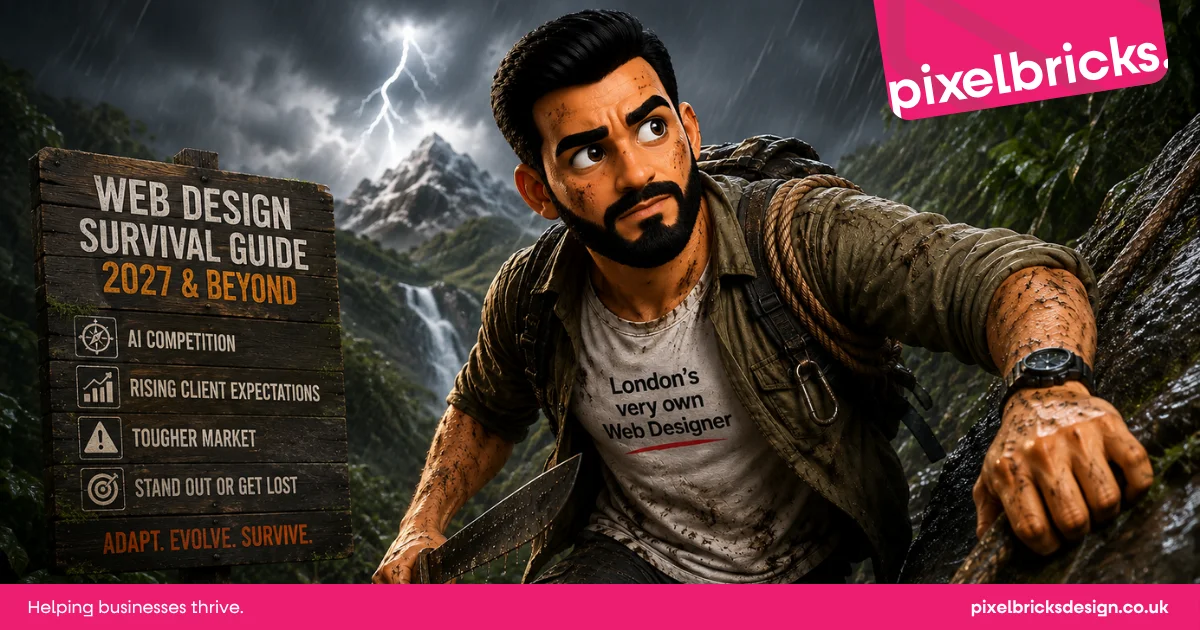
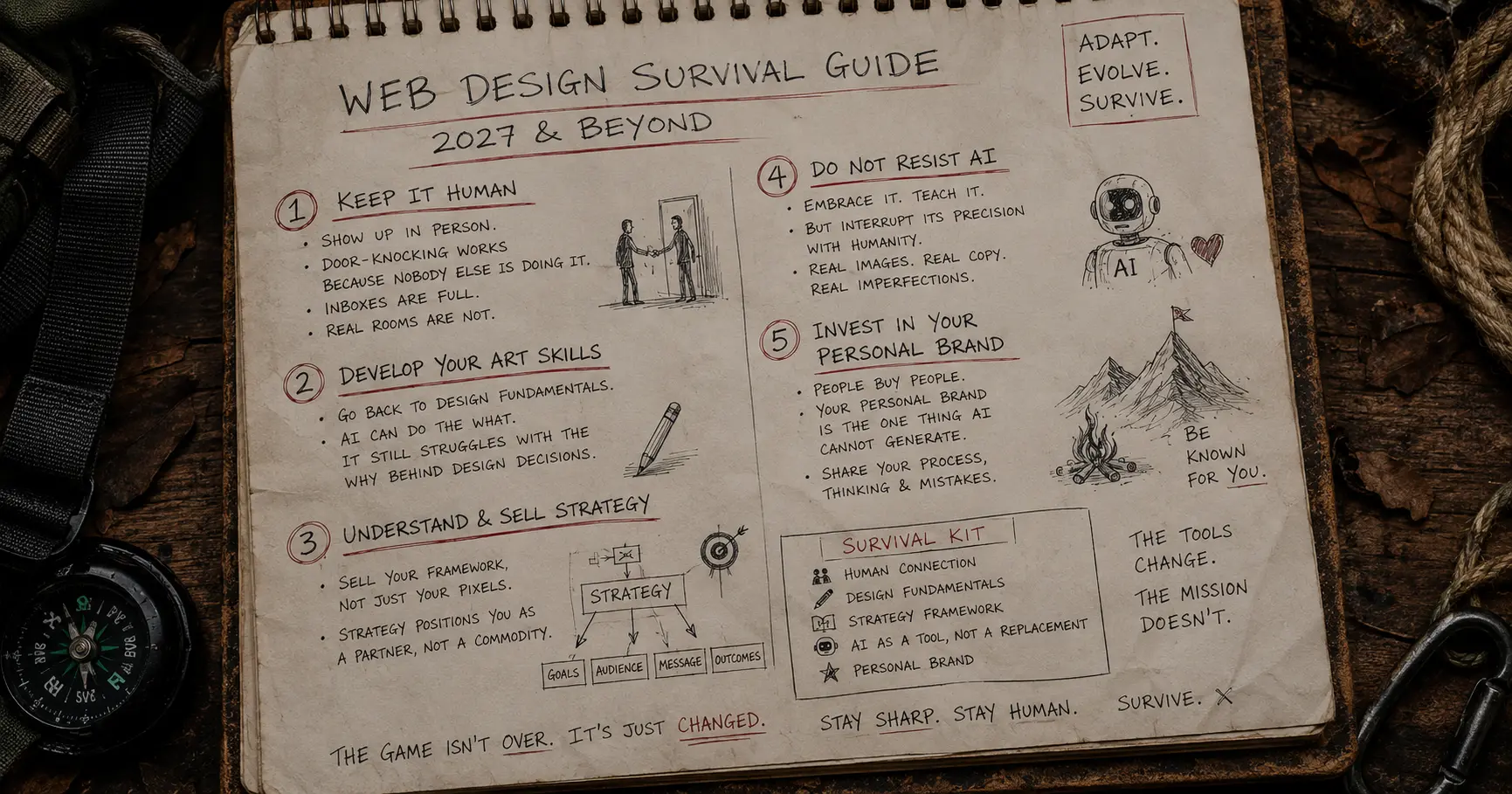
Here is how I am planning to survive 2027 and beyond. Five keys. None of them involve learning to code faster or buying better software.
1. Keep It Human. Actually Human.
Recently I did something apparently radical. I went out and knocked on doors.
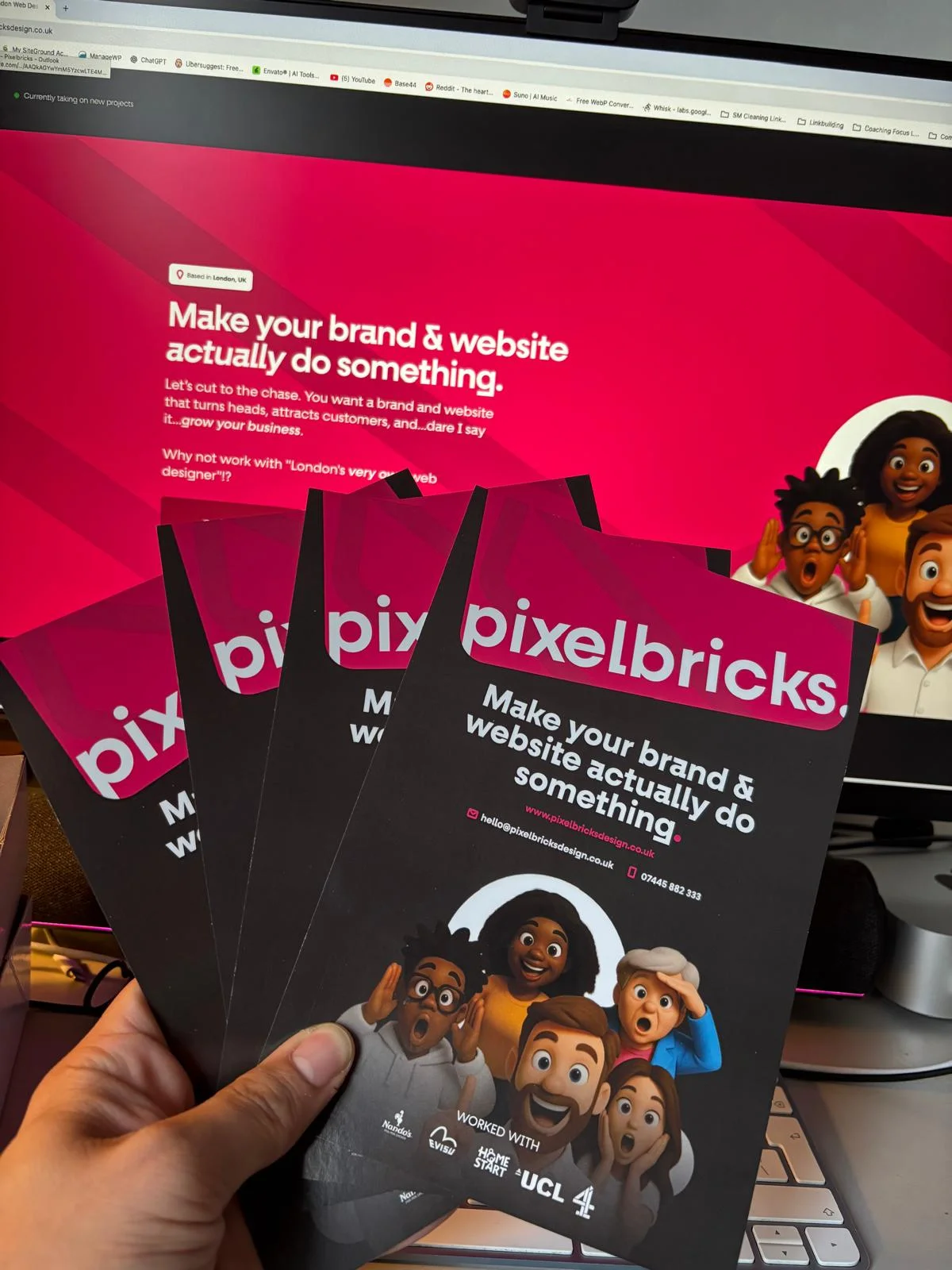
Classic, old-school, in-person canvassing in a business park / centre locally. The kind of thing people did before email existed. And you know what happened? People were genuinely shocked. Not annoyed. Shocked that a web designer would actually show up in person.
I spoke to loads of PEOPLE. Double-Glazing companies, mechanics, security comapnies.... It was great! One of the companies I visited (a signage company) invited me back the next day to meet the MD! His exact words: "If you emailed me, I would have ignored it. But getting to meet you, see that you are a cool guy, I feel more inclined to have a chat with you."
That is the whole game. Everyone is hiding behind emails, DMs, and automated sequences. The barrier to entry for digital outreach is zero, which means the value of it is also approaching zero. But turning up? Being a real person in a real room? That is now the differentiator. Not the thing you do when nothing else works. The thing you do because nobody else is doing it.
If you want to survive as a web designer, get away from your screen sometimes. Go and meet people. It sounds almost too simple, but that is exactly why it works.
2. Develop Your Art Skills, Not Just Your Software Skills
I have been going back to graphic design books. Not web design books. Not CSS tutorials. Actual, physical graphic design books about typography, composition, colour theory, and visual hierarchy.
Because here is the thing. AI can generate a layout. It cannot tell you why a layout feels right or wrong. It cannot explain why this headline needs more breathing room, or why this image creates tension that distracts from the call to action. That stuff comes from understanding core design principles, not from knowing which button to click in Figma.
The shift is from thinking of yourself as a "web designer" to thinking of yourself as an artist and a communicator. A web designer uses tools. An artist understands why decisions matter. A communicator knows what the decision is trying to say.
3. Understand and Sell Strategy
This is the one that changed everything for me.
Even if a client is adamant about using AI to build their site, you can still sell them your brain. Your framework. Your thinking. They can generate a page, but they cannot generate a strategy.
I have been developing what I call the Conversion Science framework. It is based on real research papers on conversion, real-world examples of high-converting websites, and years of actually testing what works. It is not vibes. It is not "make the button bigger and hope." It is a structured approach to understanding why people do or do not take action on a website.
This framework positions me as a strategic partner, not just another web designer. There is a massive difference. A web designer makes things look good. A strategic partner helps you make money. Guess which one charges more...
I have slightly written about this before in how to make your website convert more customers, but the short version is this: if you can connect your design decisions to business outcomes, you are no longer competing with AI tools. You are competing with other strategists, and there are far fewer of those.
4. Do Not Resist AI. Embrace It, But Keep It Human
AI is a tool. Use it. Teach your clients how to use it. But do not rely on it to do the part that matters.
I have a concept I call "Precision Interrupted by Humanity." The idea is that our designs should be sleek and precise, but deliberately interrupted by very obvious human moments. Noise. Grain. Handwriting. Real photographs of real people. Anything that reminds the viewer that a human made this.
Why? Because the in-person experience industry is booming (one client of mine pointed out that it is projected to be in the billions!!) People want humans. They are actively seeking out things that feel made by a person, not generated by a machine. The more AI content floods the internet, the more valuable human content becomes.
So stay away from stock images!! Keep the copy sounding like a person wrote it, because a person should have written it. Let the design breathe with imperfections. Not sloppy ones. Intentional ones.
AI can give you precision. You provide the humanity. AI is not replacing web designers, but it is replacing the ones who refuse to adapt. The ones who lean into being human are the ones who will still be here in 2028.
5. Invest in Your Personal Brand
People buy people. That has always been true and it is not about to change.
Pixelbricks is quietly going through a rebrand right now. Not a new logo and fresh colours kind of rebrand. A real one. The new direction is much more human, much more focused on the people behind the brand. The decision-making. The frameworks. The clients. The actual work, not just the polished output.
Because here is what I have realised. A portfolio shows what you can do. A personal brand shows who you are. And in a world where AI can generate a portfolio in minutes, who you are is the only thing it cannot copy.
Share your process. Share your thinking. Share your mistakes and what you learned from them. Let people see the person behind the work. That is what builds trust, and trust is what wins clients.
Some days I still think web design might be over. And then I remember that this year, during the height of AI panic, I took on my biggest client to date. Not because I had better tools. Not because I was cheaper. But because I showed up, I understood their problem, and I had a framework to solve it.
The five keys above are not theory. They are the exact things that got me here. If they help you too, brilliant. Please share this article!!
FAQs About Surviving as a Web Designer in 2027
Will AI actually replace web designers?
It will replace the version of web design that is just producing generic layouts. It will not replace designers who understand strategy, human connection, and actual design principles. The ones who adapt will thrive. The ones who do not will not.
Is in-person canvassing really effective for a web designer?
More than you would think. The barrier to digital outreach is basically zero, which means inboxes are full. Turning up in person is so rare now that it actually stands out. People buy from people, and meeting someone face to face builds trust faster than any email sequence.
What does "Precision Interrupted by Humanity" mean?
It is a design approach where the layout is clean and precise, but deliberately includes human moments. Real photographs, handwriting, texture, grain, anything that reminds the viewer a person made this. It is the opposite of the polished, AI-generated look that is flooding the internet.
What is the Conversion Science framework?
It is a strategic approach to web design based on real conversion research and real-world testing. Instead of designing on instinct alone, it uses evidence-based principles to guide decisions. The goal is to position the designer as a strategic partner, not just someone who makes things look good.